

Safe. seen. supported.
Success doesn’t follow a straight line.
Leftfield Learning is a one-to-one provider of specialist education, for children and young people who have not been able to thrive in traditional educational settings.
We work with young people with SEND, emotionally based school avoidance (EBSA), social, emotional and mental health needs (SEMH), medical needs, acquired or traumatic brain injury, and those whose experiences of education mean that a different approach is needed.
WE DON’T FIT YOUNG PEOPLE INTO EDUCATION.
WE BUILD EDUCATION AROUND THEM.
SEND & Neurodivergence
Autism, ADHD, dyslexia, dyspraxia, speech and language needs, sensory differences, physical disability and other complex or overlapping SEND.
SEMH & EBSA
Anxiety, trauma, mental health needs, emotionally based school avoidance and young people who need a safe, relationship-led route back into learning.
Medical Needs & Brain Injury
Young people whose education is affected by chronic illness, fatigue, complex medical needs, acquired brain injury (ABI) or traumatic brain injury (TBI).
EOTAS & Alternative Provision
Young people with EHCPs, Education Otherwise Than At School arrangements, Section 19 provision, alternative provision needs or personalised reintegration pathways.
Who we support
Young people arrive at Leftfield for many different reasons.
Some have been out of education for months or years. Some are academically able but cannot access a classroom. Some are managing anxiety, trauma, fatigue, neurodivergence or complex health needs. Others have experienced repeated placements, exclusions or approaches that simply haven’t worked for them.
We don’t begin by asking, “How do we get this young person to fit back into education?”
We begin by asking:
“What would education need to look like for this young person to be able to access it?”
Different starting points. Different destinations. No predetermined route.
When education isn’t working, something needs to change.




What we do
Leftfield provision can take place online, at home, in the community or through a carefully designed combination of approaches.
A young person’s programme might include specialist teaching, community learning, vocational experiences, preparation for adulthood, qualification work and support from an Educational Rehabilitation Assistant.
The provision is built around the individual — their strengths, needs, interests, EHCP outcomes and aspirations.
Education built around the young person
We don’t ask what’s wrong - we ask ‘what’s strong?’
Leftfield Online
Highly personalised one-to-one education for children and young people who need an alternative approach to learning.
Provision may include:
individual specialist teaching
Functional Skills English and Maths
personalised and interest-led curriculum
accredited learning
psychometric and baseline assessment where appropriate
learning mapped to EHCP outcomes
preparation for future education, training and employment
our structured 12-week transition and engagement programme.
Sessions are designed around the learner’s capacity to engage rather than expecting the learner to adapt to a conventional timetable.
Leftield Pathways
Community-based alternative provision that uses real life as a place to learn, develop and reconnect.
Provision may include:
Educational Rehabilitation Assistant support
community access
vocational experiences
travel training
independent living skills
functional English and maths in everyday contexts
social confidence
preparation for adulthood
interest-led projects
supported access to activities and opportunities.
Pathways can operate as a standalone programme or alongside Leftfield Online as part of an integrated package.

The ERA Model
Educational Rehabilitation Assistants
"Education doesn’t only happen behind a desk."
Learning through life. Not instead of education — as part of it.
Educational Rehabilitation Assistants — or ERAs — are a distinctive part of the Leftfield model.
They work one-to-one with young people in their homes and communities, building the trusted relationship from which engagement, confidence, independence and learning can develop.
An ERA session might involve travelling on a bus, visiting a library, cooking, budgeting in a supermarket, attending a vocational placement, accessing a gym or activity, completing portfolio work in a café, visiting a museum or simply beginning with leaving the house.
But these aren’t “just activities”.
They create authentic opportunities to develop communication, functional literacy and numeracy, executive functioning, emotional regulation, problem-solving, self-advocacy, independence and preparation for adulthood.
For a young person who has become disconnected from education and their community, the ERA relationship can become the bridge between where they are now and where they want to be.
Policies
Our full set of policies, including safeguarding, admissions, data protection and complaints, is available to download for families, commissioners and regulators.
Connection
Connection isn’t a reward for engagement. It is where engagement begins.
Many of the young people referred to Leftfield have spent a long time experiencing education as somewhere they cannot succeed.
By the time we meet them, simply increasing expectations, consequences or academic demands is unlikely to create engagement.
Our approach is psychology-informed and strongly influenced by Self-Determination Theory, which identifies three fundamental psychological needs that support motivation, development and wellbeing.
WHY WE WORK DIFFERENTLY
Autonomy

“I have a voice.”
Young people are meaningfully involved in decisions about their learning, goals and future.
Choice does not mean an absence of boundaries or expectations. It means helping a young person develop ownership of what happens next.
Relatedness
“I feel safe, known and understood.”
Learning depends on relationships.
We invest deliberately in connection and trust because young people are far more able to take risks, tolerate challenge and accept support when they feel secure in the relationships around them.
Competence
“I can do this.”
Many young people arrive with a powerful sense of themselves as someone who has “failed” at education.
We create achievable experiences of success and gradually build challenge, helping young people recognise their strengths, develop skills and see evidence of their own progress.
For young people whose previous experiences of education may have undermined all three, we deliberately help to build them back.
Because when a young person begins to feel safe, capable and involved in their own future, learning becomes possible again.
What Learning Can Look Like
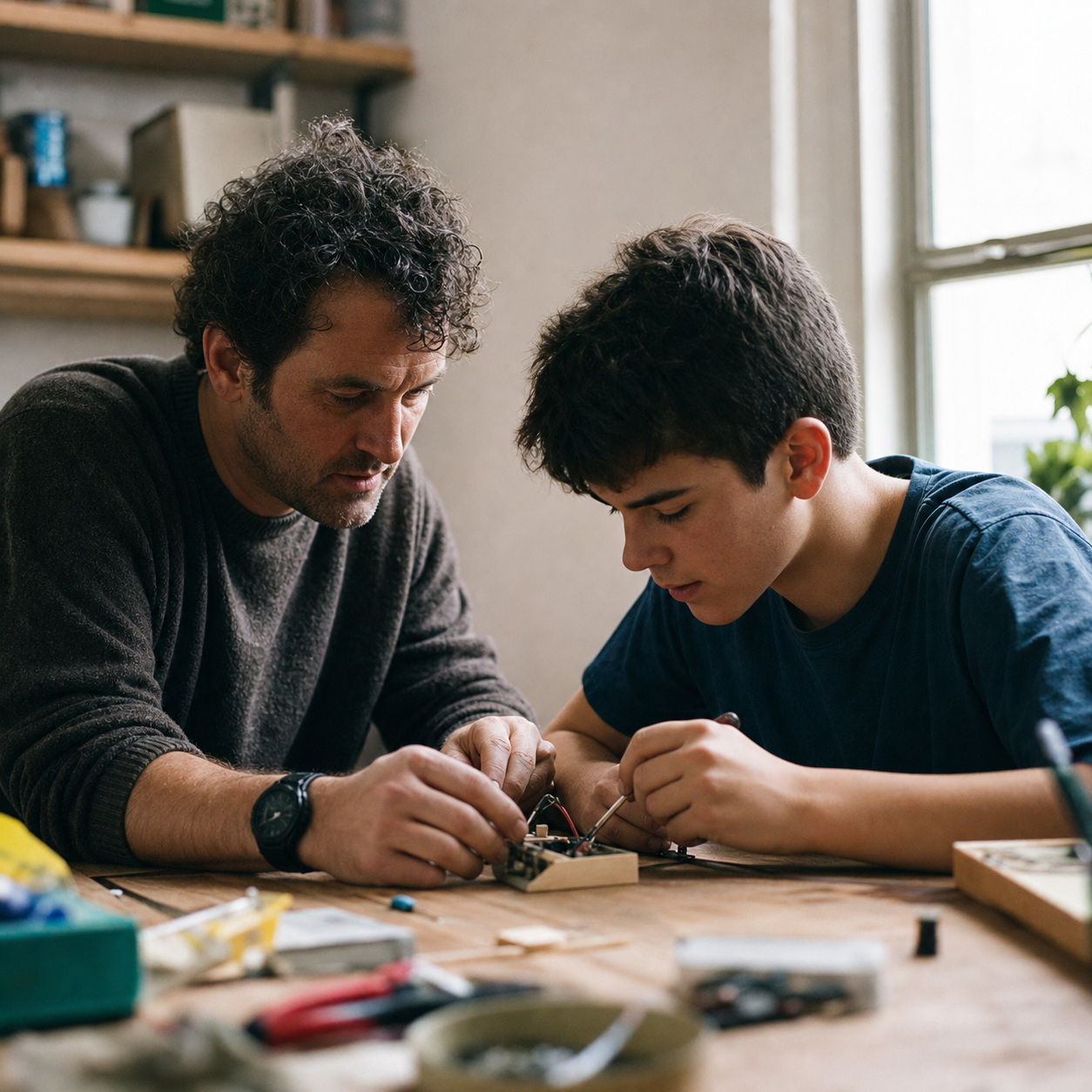
For one learner, education might initially happen at home.
For another, it might begin in a café, library, workshop or music studio.
Another might be ready for daily specialist teaching but need support to translate academic learning into everyday independence.
A Leftfield week could include:
MONDAY
ERA session — travel training, shopping, budgeting and community access.TUESDAY
One-to-one Functional English linked to an area of interest.WEDNESDAY
Supported vocational placement, developing communication, employability and independence.THURSDAY
Functional Maths through a practical project.FRIDAY
Music studio, creative project or community activity contributing towards portfolio or accredited learning.Learning is not defined by the building it happens in.
We identify the education already happening in a young person’s life and create opportunities to extend, evidence and accredit it.
Qualifications & Progression
Engagament is the beginning - not the end goal.
Our relational approach does not mean lowering expectations.
It means creating the conditions in which meaningful expectations become achievable.
Depending on their individual programme and starting point, learners can work towards nationally recognised qualifications and accreditation alongside personalised learning and preparation for adulthood.
ASDAN AWARDs
Flexible programmes recognising personal development, independence, employability and practical learning.
AQA Unit Awards
Recognition and certification of achievement across personalised areas of learning, including smaller steps towards wider qualifications
NCFE Functional Skills & Certificates
English and Maths pathways designed around the learner’s starting point, needs and future aspirations.
Preparation for Adulthood
Learning focused on employment, independent living, community participation, relationships, communication and future pathways.
Progress has more than one starting point.
For one young person, success might be achieving a qualification. For another, the first significant milestone may be meeting a trusted adult. Leaving their bedroom. Entering a shop. Travelling independently. Completing their first piece of work in years. Or beginning to believe:
“Maybe I can do this.”
We recognise those steps, evidence them and build upon them.
what Progress can look like
Progress doesn’t always begin with a qualification.
The destination matters. So does recognising how far someone has travelled to reach it.
OUT OF EDUCATION → RECOGNISED ACHIEVEMENT
A young person with a significant history of disrupted education gradually reconnects with learning through a personalised programme and progresses towards nationally recognised qualifications
Isolation → Community
A learner who initially struggles to leave home develops a trusted relationship with their ERA and gradually builds confidence, community access and greater independence.
“EDUCATION ISN’T FOR ME” → PURPOSEFUL LEARNING
A young person resistant to formal education begins through an area of genuine vocational or personal interest. English, maths, communication and employability skills are embedded naturally, creating a pathway towards wider learning and accreditation.
DEPENDENCE → GREATER AUTONOMY
Everyday experiences — travel, shopping, communication, decision-making, planning and problem-solving — become purposeful opportunities to develop the skills needed for adult life
Accredited and Recognised
Our provision is delivered through nationally recognised frameworks, giving every plan a clear, evidenced route to progress.
Accreditation bodies

Delivery partners

How We Know it is working
Personal where it counts. Robust where it matters.
Families need reassurance.
Commissioners need evidence.
Young people need adults who understand that progress is not always linear — without losing sight of where the provision is trying to take them.
Our programmes are designed with clear starting points, intended outcomes and regular review.
Baseline & Starting Point
Understanding current attainment, engagement, strengths, needs and barriers.
Personalised Planning
Identifying meaningful educational, independence and preparation-for-adulthood outcomes.
EHCP Mapping
Connecting provision directly to identified needs and outcomes where an EHCP is in place.
Session Evidence
Recording engagement, learning, progress and significant observations.
Attendance & Engagement
Monitoring not simply whether a learner was present, but how they were able to participate.
Academic & Accreditation Progress
Tracking curriculum, qualification and portfolio development.
Review & Reporting
Providing clear evidence of progress, emerging needs and recommended next steps to families and commissioners.
Different does not mean unstructured.
Our provision is flexible enough to respond to the young person and robust enough to demonstrate what is being delivered, why it is being delivered and what difference it is making.

CONNECT
Build safety, consistency and trusted relationships.
UNDERSTAND
Explore strengths, interests, needs, aspirations, barriers and previous experiences of education.
ESTABLISH A STARTING POINT
Use appropriate assessment, observation and conversation to understand where learning currently sits.
PLAN TOGETHER
Develop meaningful goals and identify how education can connect with the young person’s interests and future.
BEGIN TO BUILD
Introduce appropriate challenge, curriculum, community learning and accreditation at a pace the young person can sustain.
At the end of the transition period, we can review what has been learned and refine the longer-term programme.
OUR 12-WEEK STARTING POINT
We don’t expect trust on day one.
Every Leftfield placement begins with a structured transition period.
The first 12 weeks allow us to understand the young person beyond the information contained in a referral or EHCP.
We don’t demand engagement before building the conditions that make engagement possible.
Safeguarding & Quality
Safety is built into the culture, not added at the end.
Safeguarding is at the heart of Leftfield Learning.
Our work often takes place one-to-one, online, in homes and within community environments, so safeguarding systems must reflect the reality of how our young people access provision.
Safeguarding Arrangements:
Designated Safeguarding Lead and Deputy DSL
enhanced DBS checks and safer recruitment procedures
regular safeguarding training and updates
clear recording, reporting and escalation procedures
secure systems for recording learner information
safeguarding procedures designed for online and community-based provision
lone-working procedures and risk assessment
local authority safeguarding and LADO procedures
practice aligned with Keeping Children Safe in Education.
Who we Work with
Working together around the young person.
Leftfield works collaboratively with the people and professionals around each learner.
We welcome enquiries and referrals from:
Local Authorities & SEND Teams
Schools & Education Settings
Case Managers
Solicitors & Legal Teams
Deputies
Social Care Professionals
Health & Rehabilitation Professionals
Parents & Carers
Families are welcome to contact us directly to discuss whether our approach may be appropriate, although Local Authority-funded provision requires formal commissioning approval before a placement can begin.
Why Leftfield?
Leftfield Learning was created from a simple belief:
We are a specialist team bringing together experience in education, SEND, psychology, safeguarding, alternative provision and rehabilitation.
Our work is relationship-led, evidence-informed and ambitious.
We are interested not simply in whether a young person can complete a lesson, but in whether education is helping them build a life.
A life with greater confidence.
Greater independence.
Meaningful relationships.
Qualifications and skills where appropriate.
A sense of direction.
And, most importantly, a growing belief that they have agency over what happens next.
Young people should not have to fail repeatedly before education changes around them.

Doing life and learning your way.
Tell Us about your young person
Every referral begins with a conversation.
Tell us where things are now, what has already been tried and what you hope could be different.
We’ll consider whether Leftfield could be a good fit and, where appropriate, develop a personalised proposal for provision.
Leftfield Learning Collective
The PIP Centre, Central Park
Mill St, South Molton
EX36 4AS